
Natural Stone vs Engineered Quartz: Which Surface Is Right for Your Home or Commercial Project?
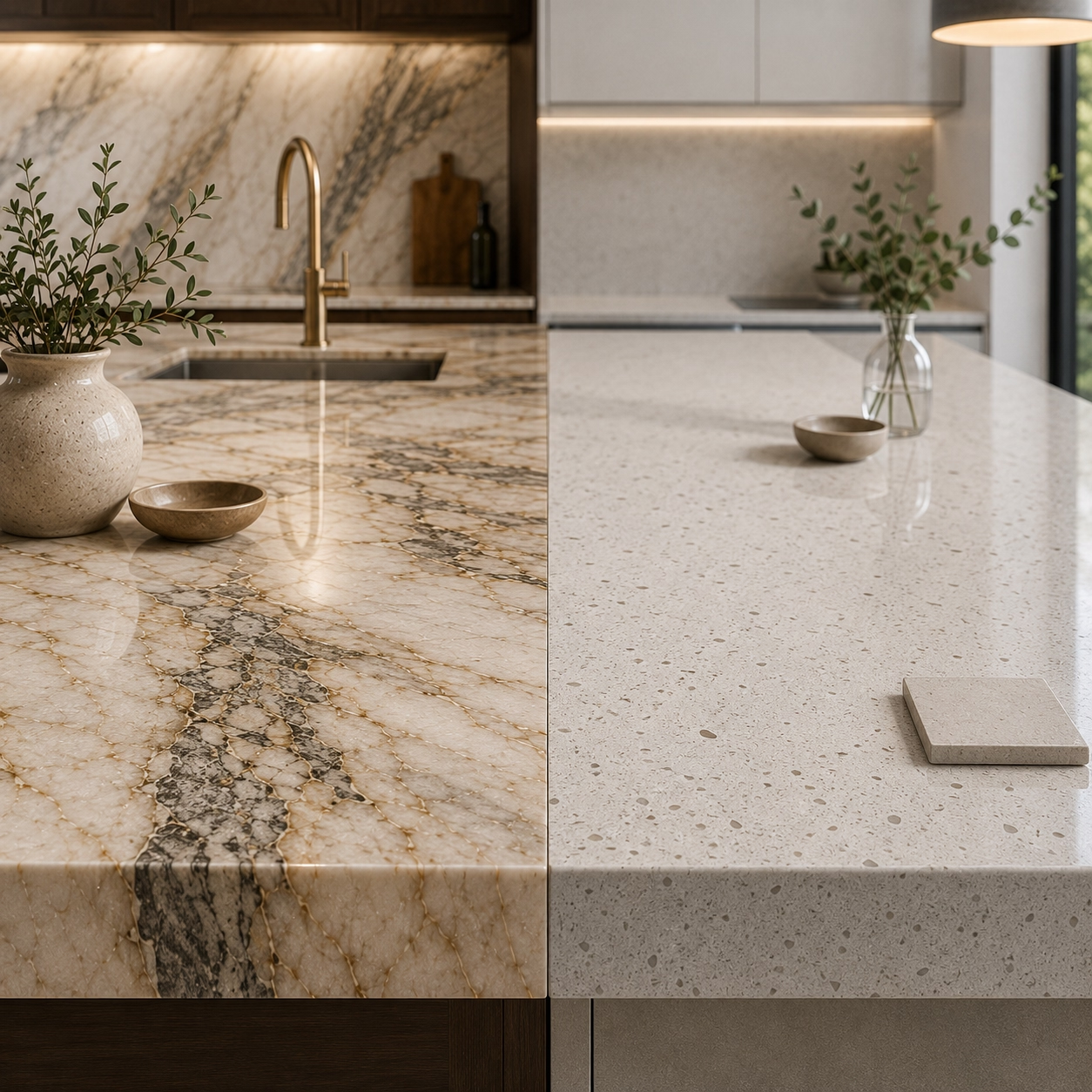
Selecting the right surface is one of the most important decisions in any residential or commercial project. Whether you’re designing a luxury kitchen, upgrading a hotel lobby, or building a modern office, the material you choose will influence aesthetics, durability, maintenance, and long-term value.
Two of the most popular options today are natural stone and engineered quartz. While both offer premium appearances and outstanding performance, each has unique characteristics that make it better suited for different applications.
This guide explores the differences between natural stone and engineered quartz, helping homeowners, architects, designers, builders, and distributors make informed decisions.
What Is Natural Stone?
Natural stone is formed deep within the earth over millions of years through geological processes. Every slab is unique, featuring one-of-a-kind colors, veins, textures, and mineral compositions that cannot be replicated.
Popular natural stones include:
- Marble
- Granite
- Quartzite
- Onyx
- Travertine
Since every slab is naturally formed, no two pieces are exactly alike, making natural stone a preferred choice for luxury projects that demand exclusivity.
What Is Engineered Quartz?
Engineered quartz is a high-performance surface manufactured using approximately 90–95% natural quartz crystals combined with premium resins and pigments.
This manufacturing process creates slabs with:
- Consistent color
- Uniform patterns
- Superior strength
- Minimal maintenance
Unlike natural stone, engineered quartz provides predictable designs, making it ideal for large-scale residential and commercial developments.
Appearance and Design
Natural Stone
Natural stone is admired for its authentic beauty. Every slab tells its own story through dramatic veining, mineral movement, and organic textures.
Popular design styles include:
- Bold marble veins
- Rich granite patterns
- Elegant quartzite movement
- Luxurious book-matched installations
Natural stone creates statement pieces that instantly elevate interiors.
Engineered Quartz
Quartz offers a cleaner, more controlled appearance.
Manufacturers can create designs inspired by:
- Italian marble
- Concrete
- Limestone
- Modern solid colors
- Contemporary textures
Its consistency makes it perfect when multiple slabs are required for larger spaces.
Durability Comparison
Both materials are extremely durable but excel in different ways.
Natural Stone
Advantages:
- Excellent heat resistance
- Long lifespan
- High structural strength
- Suitable for indoor and outdoor applications (depending on stone type)
Considerations:
- Some stones require periodic sealing.
- Marble is softer than granite or quartzite and can etch when exposed to acidic substances.
Engineered Quartz
Advantages:
- Exceptional scratch resistance
- Non-porous surface
- Highly stain resistant
- No sealing required
- Excellent for busy kitchens and bathrooms
Considerations:
- Prolonged direct heat exposure should be avoided.
- Primarily recommended for indoor use.
Maintenance Requirements
One of the biggest differences lies in maintenance.
Natural Stone
Maintenance depends on the type of stone.
Recommended care includes:
- Regular cleaning with pH-neutral cleaners
- Periodic sealing
- Immediate removal of spills
- Avoid harsh chemicals
Proper maintenance helps preserve the natural beauty for decades.
Engineered Quartz
Quartz requires very little maintenance.
Simply:
- Clean with mild soap and water
- Wipe spills promptly
- Avoid abrasive cleaners
- Use trivets for extremely hot cookware
No sealing or polishing is required.
Color Consistency
Natural stone offers individuality.
Every slab features:
- Unique veins
- Natural variations
- Organic movement
This uniqueness makes each installation exclusive.
Quartz, on the other hand, provides remarkable consistency.
Every slab maintains:
- Uniform color
- Predictable veining
- Reliable patterns
This is particularly valuable for commercial projects where continuity is important.
Best Applications
Natural Stone
Ideal for:
- Luxury residences
- Feature walls
- Hotel lobbies
- Fireplace surrounds
- Reception areas
- Staircases
- Exterior cladding
- Outdoor kitchens
Engineered Quartz
Perfect for:
- Kitchen countertops
- Bathroom vanities
- Commercial worktops
- Healthcare facilities
- Retail spaces
- Office pantries
- Restaurants
- Hospitality projects
Sustainability
Both materials can contribute to sustainable construction.
Natural stone is:
- Naturally occurring
- Extremely durable
- Long-lasting
- Fully recyclable
Engineered quartz minimizes waste through advanced manufacturing techniques and offers long service life, reducing replacement frequency.
Selecting high-quality materials from responsible manufacturers supports environmentally conscious building practices.
Cost Considerations
Pricing depends on several factors, including rarity, thickness, finish, and origin.
Natural stone pricing varies based on:
- Quarry source
- Veining
- Color rarity
- Slab size
Quartz pricing is generally more predictable due to standardized manufacturing.
Rather than focusing solely on initial cost, consider the total lifetime value, maintenance requirements, and durability.
Which Material Is Better?
There isn’t a universal answer.
Choose Natural Stone if you value:
- One-of-a-kind beauty
- Luxury aesthetics
- Organic patterns
- Architectural statement pieces
Choose Engineered Quartz if you need:
- Low maintenance
- Consistent appearance
- High stain resistance
- Busy family kitchens
- Commercial workspaces
Many premium projects successfully combine both materials.
For example:
- Marble feature walls
- Quartz kitchen countertops
- Granite outdoor kitchens
- Quartz bathroom vanities
This approach balances beauty with practicality.
Why Choose Opaline Surfaces?
At Opaline Surfaces, we combine premium craftsmanship with world-class manufacturing to supply exceptional natural stone, engineered quartz, and porcelain surfaces to customers across North America.
Our commitment includes:
- Carefully selected premium materials
- Advanced manufacturing technology
- Rigorous quality control
- Consistent product availability
- Secure export packaging
- Reliable Delivered Duty Paid (DDP) shipping
- Dedicated customer support
Whether you’re an architect, builder, importer, distributor, or homeowner, we provide surface solutions designed to meet the highest expectations.
Final Thoughts
Choosing between natural stone and engineered quartz ultimately depends on your project’s design goals, maintenance preferences, and functional requirements.
Natural stone delivers unmatched individuality and timeless elegance, while engineered quartz offers outstanding durability, consistency, and ease of maintenance.
By understanding the strengths of each material, you can confidently select the perfect surface that enhances both the beauty and performance of your space for years to come.
Frequently Asked Questions
Is natural stone better than engineered quartz?
Neither is universally better. Natural stone offers unique beauty, while engineered quartz provides superior consistency and lower maintenance.
Does quartz require sealing?
No. Engineered quartz is non-porous and does not require sealing.
Which surface is best for kitchen countertops?
Engineered quartz is often preferred for kitchens because it is stain-resistant, hygienic, and easy to maintain.
Can natural stone be used outdoors?
Yes. Many natural stones, including granite and quartzite, perform exceptionally well in outdoor environments.
How long do quartz countertops last?
With proper care, premium engineered quartz surfaces can last for decades while maintaining their appearance and performance.